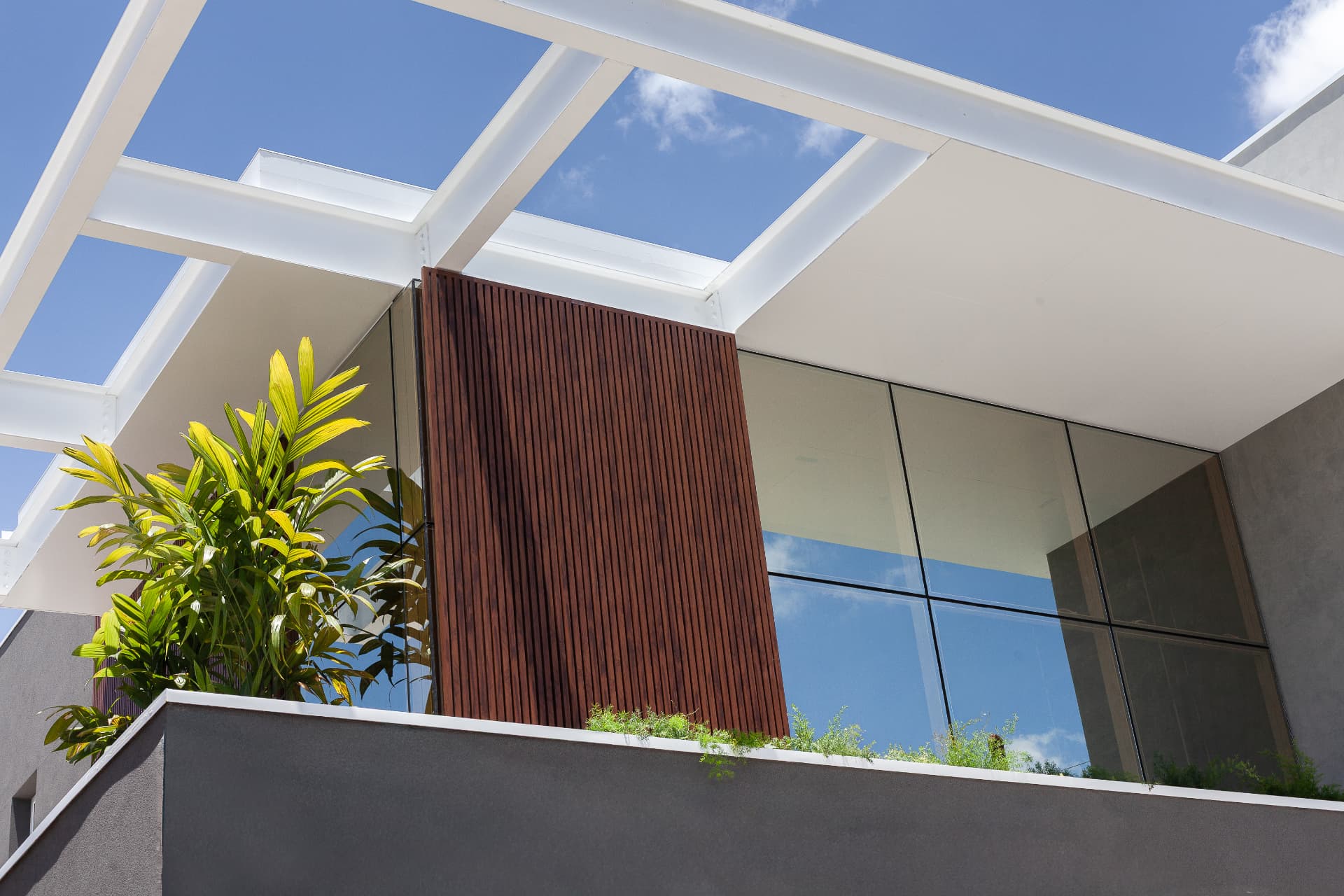
To choose a plot for a contemporary house, assess solar orientation, topography, dimensions and proportion, zoning rules (setbacks, site coverage and plot ratio), soil type, available infrastructure and surroundings. Orientation and topography shape the design most — and are the only factors that cannot be changed later.
Many people have already bought the plot before hiring an architect. It is understandable — but this is the decision that most limits or liberates the design. It is worth involving the architect before the purchase.
Solar orientation
In Curitiba, north and east faces bring just the right amount of sun into living spaces. A plot whose frontage and best view face south forces the design to choose between the view and comfort — a trade-off that is never free.
Topography
A gentle slope is a gift: it allows levels, a natural lower floor and privacy. A steep slope means retaining walls, earthworks and structural cost that appears before the first metre of wall.
Dimensions and proportion
Narrow, deep plots push the programme upwards and compromise natural light in the middle of the plan. Wider frontages allow horizontal houses, with courtyards and cross ventilation.
Planning rules
- Zoning and permitted use.
- Front, side and rear setbacks.
- Site coverage and plot ratio.
- Maximum height and number of storeys.
- Permeability rate and protected trees — a decisive item in Curitiba.
Soil, infrastructure and surroundings
- Soil survey: it defines the foundation type and can change the budget significantly.
- Water, sewage, power and drainage networks available on the street.
- Noise: proximity to busy roads, retail and schools.
- Appreciation potential and the future height of neighbouring buildings — today's view can be tomorrow's wall.
A good plot reduces construction cost before it begins. A difficult plot charges in structure what it saved on price.
The feasibility study before buying
A preliminary analysis cross-referencing planning rules, sunlight, topography and the family's brief shows, within a few weeks, whether the desired house fits that plot. It is the cheapest investment in the whole process.