
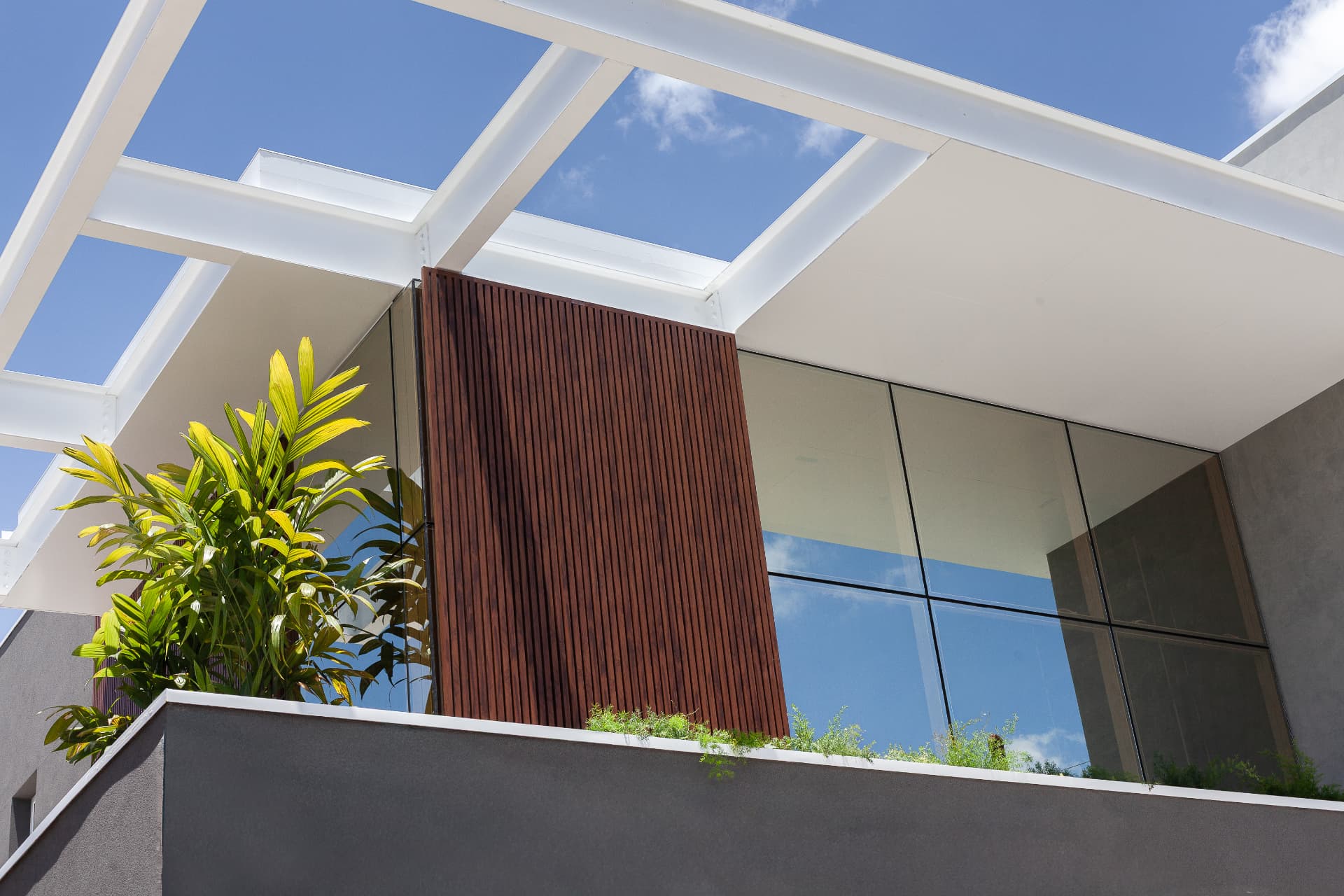
Renovating tends to be worthwhile when the structure is sound, the location is good and the floor plan allows adaptation — usually costing between 40% and 70% of a new build. Building from scratch pays off when there are structural problems, serious limitations to sun exposure and ventilation, or when the desired programme does not fit the existing property.
It is the question that opens most of our first consultations. The answer is rarely ideological: it comes from a technical diagnosis of the property added to an honest accounting of time, cost and expectations.
When renovating makes more sense
- The structure and foundations are in good condition, with no active cracks or persistent leaks.
- The location is hard to replicate — view, neighbourhood, an established community.
- The floor plan allows redistribution without demolishing structural elements.
- The timeline is short: partial renovations can be carried out in stages.
- The property has sentimental or architectural value worth preserving.
When building from scratch pays off
- There is structural compromise, building services at the end of their service life, or a major damp problem.
- The solar orientation and natural ventilation of the existing property are poor and cannot be corrected.
- The desired programme — number of bedrooms, ceiling height, integration — does not fit the current building.
- The estimated renovation cost exceeds 70% of the value of an equivalent new build.
- You want to apply healthy architecture criteria to the entire building envelope, starting from the siting.
The accounting that matters
Comparing only the price per square metre is misleading. Always add: demolition and debris removal, upgrading electrical and plumbing systems, structural reinforcement, the cost of temporary housing and the risk of the unexpected — always higher in renovations, where you only find out what is there once the wall is opened.
A renovation requires more design, not less. It is the opposite of what most people starting out assume.
How to decide with confidence
The most economical path is to first commission a feasibility study: a survey of the property, a technical diagnosis and two compared scenarios — renovating or building — with a cost and timeline estimate for each. With that document in hand, the decision stops being a guess.

